
Trump’s 2025 Executive Actions: How They Could Affect Financial Markets
January 30, 2025
Trump’s 2025 Executive Actions: How They Could Affect Financial Markets
Introduction: Policy and Markets in 2025
Executive actions often serve as a window into a president’s policy priorities, and for financial markets, these decisions can be transformative. In 2025, President Donald Trump signed a series of executive actions that are already influencing the U.S. economy and global markets. From changes in environmental policies to tariffs and defense spending, these actions are shaping sectors like energy, trade, and technology.
For financial advisors, asset managers, and institutional investors, understanding these changes is key to navigating risks and uncovering opportunities. This article explores seven major executive actions from 2025 and analyzes their potential market implications.
1. Putting America First in International Environmental Agreements
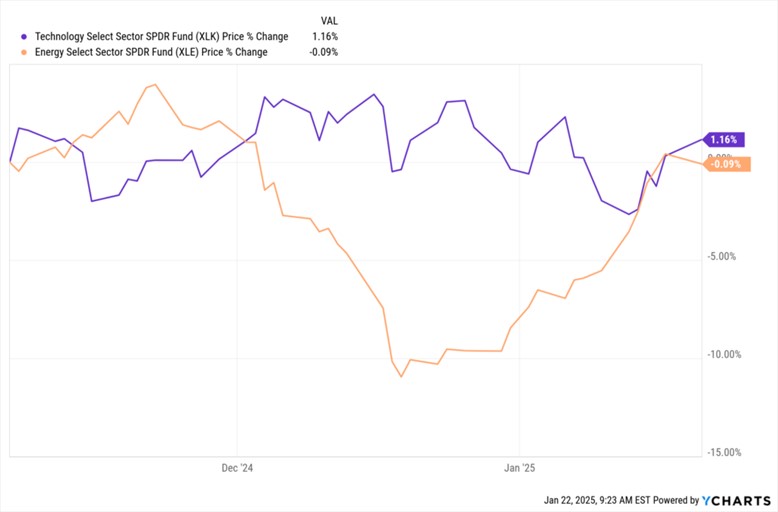
On January 20, 2025, President Trump issued an executive order redirecting the United States’ approach to international environmental agreements. The directive emphasized prioritizing domestic economic interests, energy independence, and national sovereignty while reevaluating commitments to global environmental initiatives like the Paris Climate Agreement.
Market Implications:
- Energy Sector Impact: With a renewed focus on domestic energy independence, traditional energy companies such as ExxonMobil and Chevron may see increased opportunities for growth, while renewable energy firms could face reduced federal incentives and subsidies.
- Global Market Dynamics: This shift could create divergence between the U.S. and other nations focused on renewable energy investments, potentially affecting global competitiveness for American clean energy firms.
- Trade Relations: By moving away from international environmental frameworks, the U.S. may experience challenges in negotiating trade agreements with environmentally-focused nations, potentially impacting industries reliant on exports.
Investments to Watch:
- Traditional Energy ETFs: Funds such as the Energy Select Sector SPDR Fund (XLE) may benefit from increased domestic fossil fuel production.
- ESG Portfolios: Investors should monitor the potential impact on ESG-focused funds, such as the iShares Global Clean Energy ETF (ICLN), as diminished federal support for renewables may affect their performance.
- Energy Infrastructure Funds: Funds focused on U.S. energy infrastructure, like the Alerian MLP ETF (AMLP), could see gains as domestic energy production increases.
2. America First Trade Policy Directive: A Renewed Focus on Trade Deficits and Fair Practices
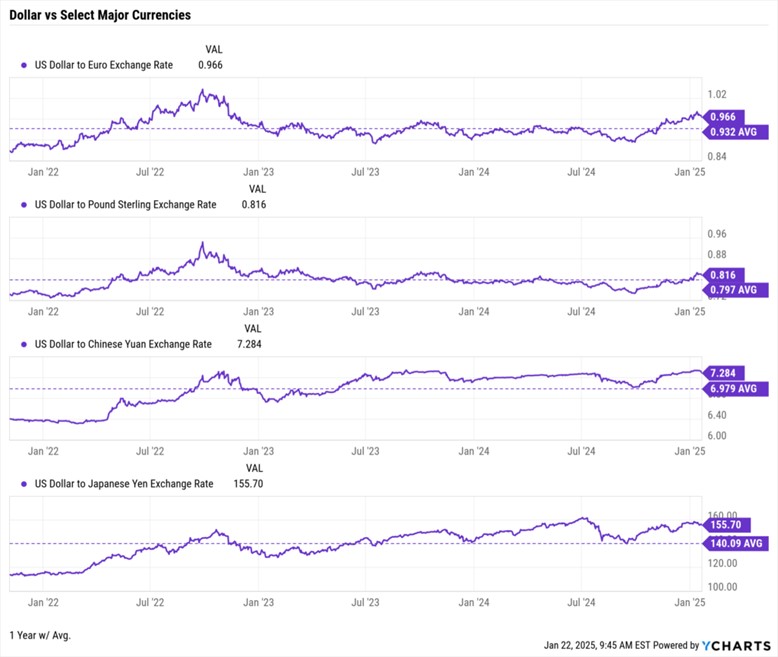
The Trump administration introduced the “America First Trade Policy” through a detailed memorandum aimed at addressing persistent trade deficits, currency manipulation, and unfair trade practices. While no tariffs have been enacted yet, the policy outlines measures that could reshape trade relations with key partners, including Canada and Mexico.
Key Provisions of the Directive:
- Global Supplemental Tariff: The administration has directed investigations into trade deficits and the feasibility of a supplemental tariff to protect American industries.
- Currency Oversight: Greater scrutiny of currency practices among major U.S. trading partners could lead to targeted economic measures.
- USMCA Review: Ahead of the 2026 USMCA review, the administration is prioritizing assessments of the agreement’s economic impact on U.S. industries.
Market Implications:
- Trade Relations: The policy signals stricter trade enforcement and heightened scrutiny of agreements like the USMCA. Any resulting tensions could impact industries such as agriculture, automobiles, and technology.
- Currency Markets: Increased oversight on currency manipulation may lead to volatility in forex markets, especially for the U.S. dollar against currencies like the Mexican peso and Canadian dollar.
- Regulatory Costs: If the proposed External Revenue Service (ERS) is established, companies engaging in international trade could face additional compliance challenges.
Investments to Watch:
- Domestic Manufacturing Funds: Funds like the iShares U.S. Industrials ETF (IYJ) may stand to benefit as the policy aims to boost domestic production.
- Global Diversification Risks: Funds heavily reliant on global supply chains or international trade agreements might encounter headwinds due to increased regulatory complexity.
3. Unleashing Alaska’s Extraordinary Resource Potential
On January 20, 2025, President Trump signed an executive order to promote energy independence by expanding oil and gas exploration in Alaska, including the Arctic National Wildlife Refuge (ANWR). This move aims to boost domestic energy production, create jobs, and reduce reliance on foreign energy sources.
Market Implications:
- Energy Sector Growth: The development of Alaskan oil and gas resources could provide significant opportunities for companies involved in exploration, production, and infrastructure. This may lead to increased revenues for major energy corporations and energy services providers.
- Environmental Concerns: Expanding drilling operations in environmentally sensitive areas like ANWR could draw criticism from ESG-focused investors and organizations, potentially creating reputational risks for companies involved.
- Supply Chain Impact: Increased domestic production may stabilize energy supply chains, reducing price volatility and benefiting industries reliant on stable energy costs.
Investments to Watch:
- Energy ETFs: Funds like the Energy Select Sector SPDR Fund (XLE) could benefit from expanded U.S. oil and gas production.
- Infrastructure Funds: Investments such as the Global X MLP & Energy Infrastructure ETF (MLPX) may see opportunities as new projects in Alaska require infrastructure development.
- ESG Considerations: Funds focused on sustainability and environmental concerns, such as the iShares MSCI USA ESG Select ETF (SUSA), may experience shifts in sentiment due to policy changes that prioritize traditional energy over environmental protection.
This executive order underscores a significant pivot toward maximizing domestic resource potential, particularly in Alaska, which could have far-reaching effects on energy markets and investment strategies.
4. National Emergency Declaration at the Southern Border
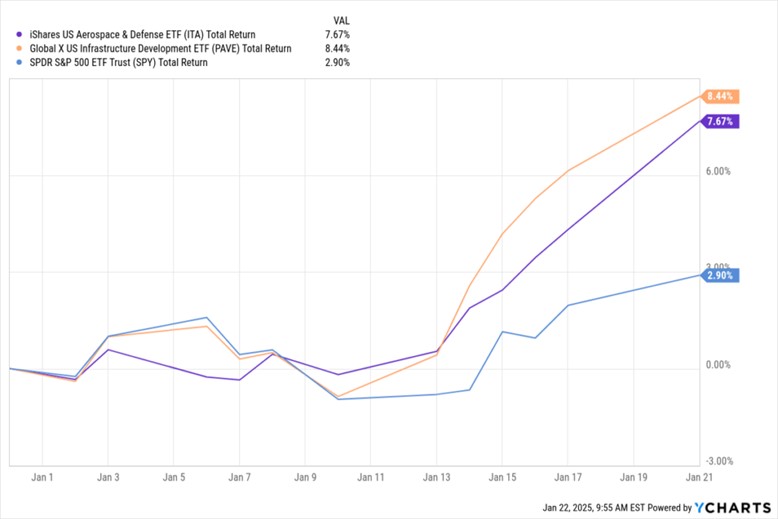
On January 20, 2025, President Trump signed an executive order declaring a national emergency at the U.S.-Mexico border. This measure aims to enhance border security through increased personnel, technology, and infrastructure development, citing concerns about illegal immigration, drug trafficking, and national security.
Market Implications:
- Defense and Security Sector: The focus on border security is expected to drive demand for defense and surveillance technologies, potentially benefiting companies specializing in advanced security solutions and infrastructure development.
- Cross-Border Trade: Heightened security measures could slow down the flow of goods across the U.S.-Mexico border, creating potential disruptions in supply chains, particularly for industries like automotive manufacturing and agriculture that rely heavily on cross-border trade.
- Labor Markets: Stricter immigration controls may impact industries reliant on migrant labor, such as agriculture, construction, and hospitality, potentially leading to higher labor costs.
Investments to Watch:
- Defense and Security ETFs: Funds like the iShares U.S. Aerospace & Defense ETF (ITA) and SPDR S&P Aerospace & Defense ETF (XAR) could benefit from increased government spending on security technologies and infrastructure.
- Agriculture ETFs: Funds such as the VanEck Agribusiness ETF (MOO) may experience volatility if stricter border controls disrupt agricultural labor markets and supply chains.
- Infrastructure Funds: The Global X U.S. Infrastructure Development ETF (PAVE) could see opportunities tied to new infrastructure projects aimed at bolstering border security.
The national emergency declaration highlights a significant shift in federal priorities, with potential ripple effects across multiple sectors, including defense, agriculture, and manufacturing. Financial professionals should monitor developments closely to identify investment opportunities and risks stemming from these policy changes.
5. Executive Order Targeting TikTok and Other Foreign-Controlled Applications
On January 20, 2025, President Trump signed an executive order under the Protecting Americans from Foreign Adversary-Controlled Applications Act, mandating stricter data security measures and limiting the operations of TikTok and similar applications within the U.S. This move is part of a broader effort to safeguard national security and protect user data from foreign adversaries.
Market Implications:
- Technology Sector: U.S.-based technology companies, particularly social media platforms like Meta (Facebook) and Snap, could see increased user acquisition if TikTok’s operations are significantly curtailed. This shift could lead to enhanced advertising revenues for domestic platforms.
- Data Security Companies: Heightened focus on protecting user data is likely to boost demand for cybersecurity solutions, benefiting companies specializing in data encryption and network security.
- Consumer Goods: Brands heavily reliant on TikTok for marketing may need to reallocate advertising budgets, potentially affecting sectors like fashion, beauty, and consumer electronics.
Investments to Watch:
- Technology ETFs: Funds such as the Invesco QQQ Trust (QQQ) and the Technology Select Sector SPDR Fund (XLK) may benefit from the reallocation of advertising spend to domestic platforms and growth in cybersecurity investments.
- Cybersecurity ETFs: Funds like the ETFMG Prime Cyber Security ETF (HACK) could gain traction as businesses invest more in data protection technologies.
- Consumer Discretionary ETFs: The Consumer Discretionary Select Sector SPDR Fund (XLY) could experience short-term shifts as companies adjust marketing strategies.
This executive action underscores the growing significance of digital privacy and national security in shaping market dynamics. Financial professionals should monitor the evolving regulatory landscape for potential investment opportunities and risks tied to data privacy and technology trends.
6. Initial Rescissions of Harmful Executive Orders and Actions
On January 20, 2025, the Trump administration rescinded a series of executive orders and actions from previous administrations that were deemed to be harmful to economic growth, national security, or energy independence. These reversals included rollbacks of environmental regulations, labor policies, and trade-related mandates, signaling a shift toward deregulation and economic revitalization.
Market Implications:
- Energy Sector: Rollbacks on environmental restrictions are expected to lower operational costs for oil, gas, and coal companies, potentially boosting profitability. This could lead to increased domestic energy production and exports, particularly in natural gas and crude oil markets.
- Financial and Manufacturing Sectors: Deregulatory policies aimed at reducing compliance burdens may create more favorable conditions for financial services and manufacturing firms, driving investment and innovation in these sectors.
- ESG Investment Concerns: While deregulation may attract traditional capital, it could also deter ESG-focused investors due to concerns about sustainability and long-term environmental impacts.
Investments to Watch:
- Energy ETFs: Funds such as the Vanguard Energy ETF (VDE) and the SPDR S&P Oil & Gas Exploration & Production ETF (XOP) could see growth from increased investment in the energy sector.
- Infrastructure Funds: Policies encouraging domestic production and energy independence could benefit funds like the iShares U.S. Infrastructure ETF (IFRA).
- Broad Market ETFs: Reduced compliance costs across multiple industries could have a positive impact on funds like the SPDR S&P 500 ETF Trust (SPY), which represents a diverse range of sectors.
The rescission of these executive actions reflects a strategic shift toward prioritizing economic growth and energy independence, providing opportunities for financial professionals to adjust portfolios in alignment with these regulatory changes.
7. Withdrawal from the OECD Global Tax Deal
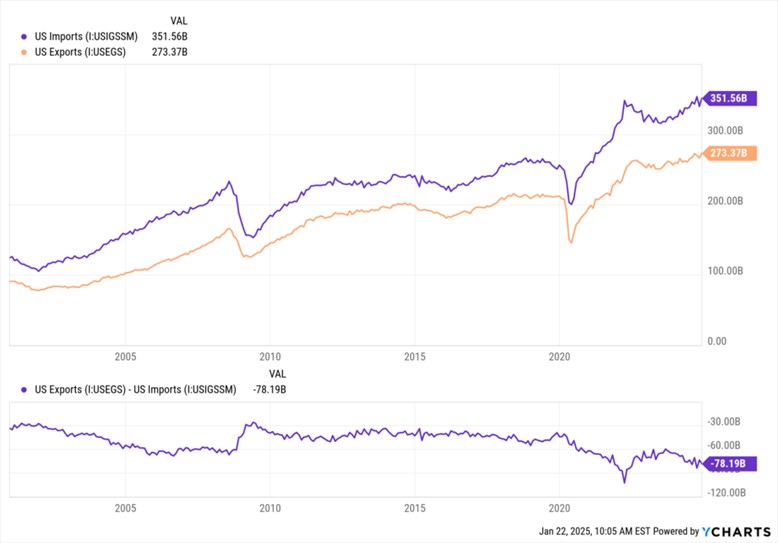
On January 20, 2025, President Trump announced the withdrawal of the United States from the Organization for Economic Co-operation and Development (OECD) Global Tax Deal. This deal, originally designed to establish a global minimum tax on multinational corporations, aimed to prevent tax base erosion and profit shifting. The decision reflects the administration’s focus on domestic economic priorities and maintaining the competitive tax advantages for U.S.-based companies.
Market Implications:
- Corporate Tax Environment: The withdrawal allows U.S. corporations to retain a more favorable tax environment compared to global peers. This could enhance profitability for large multinational companies based in the U.S.
- Foreign Direct Investment (FDI): A competitive tax structure could attract foreign investment, as corporations may choose the U.S. as a hub for operations due to its tax advantages.
- Global Trade Relations: While beneficial domestically, the withdrawal could strain international relations with key trading partners who support the deal, potentially affecting cross-border trade dynamics.
Investments to Watch:
- U.S. Multinational ETFs: Funds like the iShares U.S. Technology ETF (IYW) and the Vanguard Mega Cap ETF (MGC), which track companies benefiting from lower tax rates, could see gains.
- Tax-Advantaged Corporations: Sectors with significant multinational operations, such as technology, pharmaceuticals, and financial services, are likely to benefit from the absence of a global minimum tax.
- Global Market ETFs: Conversely, global funds like the iShares MSCI ACWI ETF (ACWI) may face pressures due to trade tensions stemming from the U.S. withdrawal.
The withdrawal from the OECD Global Tax Deal reinforces the administration’s “America First” economic strategy, emphasizing domestic economic growth and corporate competitiveness while presenting new considerations for international trade and investment strategies.
Ambiguity Surrounding Cryptocurrency Regulations
The Trump administration’s recent actions regarding cryptocurrency have left the regulatory landscape uncertain. While initial speculation suggested that an executive order might clarify guidelines or offer a framework for digital assets, no formal directive has been issued as of yet. This indecision has created a void, leaving investors and institutions to navigate a fragmented and uncertain environment.
Market Implications
- Regulatory Uncertainty: The lack of clear guidance leaves crypto markets exposed to sudden regulatory shocks, which could deter institutional investors from increasing their holdings.
- Market Volatility: Uncertainty often leads to heightened market fluctuations as traders react to both speculative news and global macroeconomic trends.
- Institutional Adoption: Without a formal regulatory framework, institutional players may hesitate to expand their exposure to cryptocurrencies, which could delay broader adoption.
Investments to Watch
- Bitcoin and Ethereum: As the largest and most established cryptocurrencies, Bitcoin and Ethereum remain at the forefront of market movements. Their price trends often reflect investor sentiment regarding regulatory developments.
- XRP: Ripple’s XRP token could be significantly affected by the regulatory landscape due to its legal battles and its role as a payment-focused cryptocurrency. Any clarity in regulations could have a major impact on its price and adoption.
- Crypto ETFs: Funds such as the ProShares Bitcoin Strategy ETF (BITO) or Grayscale Ethereum Trust (ETHE) provide indirect exposure to crypto assets, offering a less volatile entry point for investors.
- Blockchain-Driven Stocks: Companies leveraging blockchain technology, such as Coinbase (COIN) or Riot Platforms (RIOT), may see increased volatility as regulatory uncertainty continues to shape the sector.
Looking Ahead
For advisors and asset managers, this period of ambiguity around crypto executive actions presents both risks and opportunities. While volatility in crypto markets may deter some investors, others might view this as a chance to capitalize on discounted assets or explore alternative investments tied to blockchain technology. Regardless, keeping an eye on upcoming announcements or executive actions remains critical for understanding how cryptocurrency fits into a diversified portfolio strategy.
This evolving regulatory environment underscores the importance of staying informed and agile, particularly as the U.S. government continues to shape its stance on digital assets.
Conclusion: Navigating 2025 with Informed Insights
President Trump’s 2025 executive actions highlight the
importance of understanding how policy changes influence financial markets.
From trade and defense to energy and healthcare, these actions will shape the
economic landscape for years to come.
Disclaimer
©2024
YCharts, Inc. All Rights Reserved. YCharts, Inc. (“YCharts”) is not registered
with the U.S. Securities and Exchange Commission (or with the securities
regulatory authority or body of any state or any other jurisdiction) as an
investment adviser, broker-dealer or in any other capacity, and does not
purport to provide investment advice or make investment recommendations. This
report has been generated through application of the analytical tools and data
provided through ycharts.com and is intended solely to assist you or your
investment or other adviser(s) in conducting investment research. You should
not construe this report as an offer to buy or sell, as a solicitation of an
offer to buy or sell, or as a recommendation to buy, sell, hold or trade, any
security or other financial instrument. For further information regarding your
use of this report, please go to: ycharts.com/about/disclosure
RISK
DISCLOSURE: Investing
involves risk including the potential loss of principal. No investment strategy
can guarantee a profit or protect against loss in periods of declining values.
Past performance does not guarantee future results.
This material
is for information purposes only and is not intended as an offer or
solicitation with respect to the purchase or sale of any security. The content
is developed from sources believed to be providing accurate information; no
warranty, expressed or implied, is made regarding accuracy, adequacy,
completeness, legality, reliability, or usefulness of any information. Consult
your financial professional before making any investment decision. For
illustrative use only.
SECURITY
REMINDER: E-mail
transmission may not be secure. If you would like to be contacted by
other means please alert Paragon Financial Advisors. By your use of
email, Paragon Financial Advisors assumes you agree to our transmission of
information by e-mail. Please do NOT send Social Security numbers or
account numbers, confidential or privileged information via E-mail.
CONFIDENTIALITY
NOTICE: All
e-mail sent to or from this address will be received or otherwise recorded by
Paragon Financial Advisors and is subject to archival, monitoring or review by,
and/or disclosure to the Securities and Exchange Commission. This email and any
files transmitted with it are confidential and are intended solely for the use
of the individual or entity to which they are addressed. This communication
represents the originator’s personal views and opinions, which do not
necessarily reflect those of Paragon Advisors. If you are not the original
recipient or the person responsible for delivering the email to the intended
recipient, be advised that you have received this email in error, and that any
use, dissemination, forwarding, printing, or copying of this email is strictly
prohibited. If you received this email in error, please immediately notify info@paragon-adv.com
Category

© 2026 Paragon Advisors, LLC. All rights reserved. | Site Credit: Kasey S Consulting